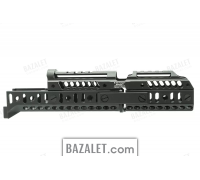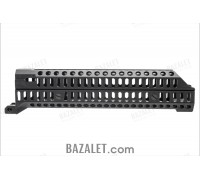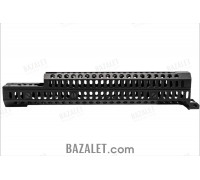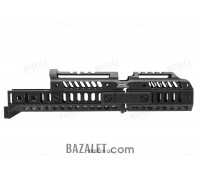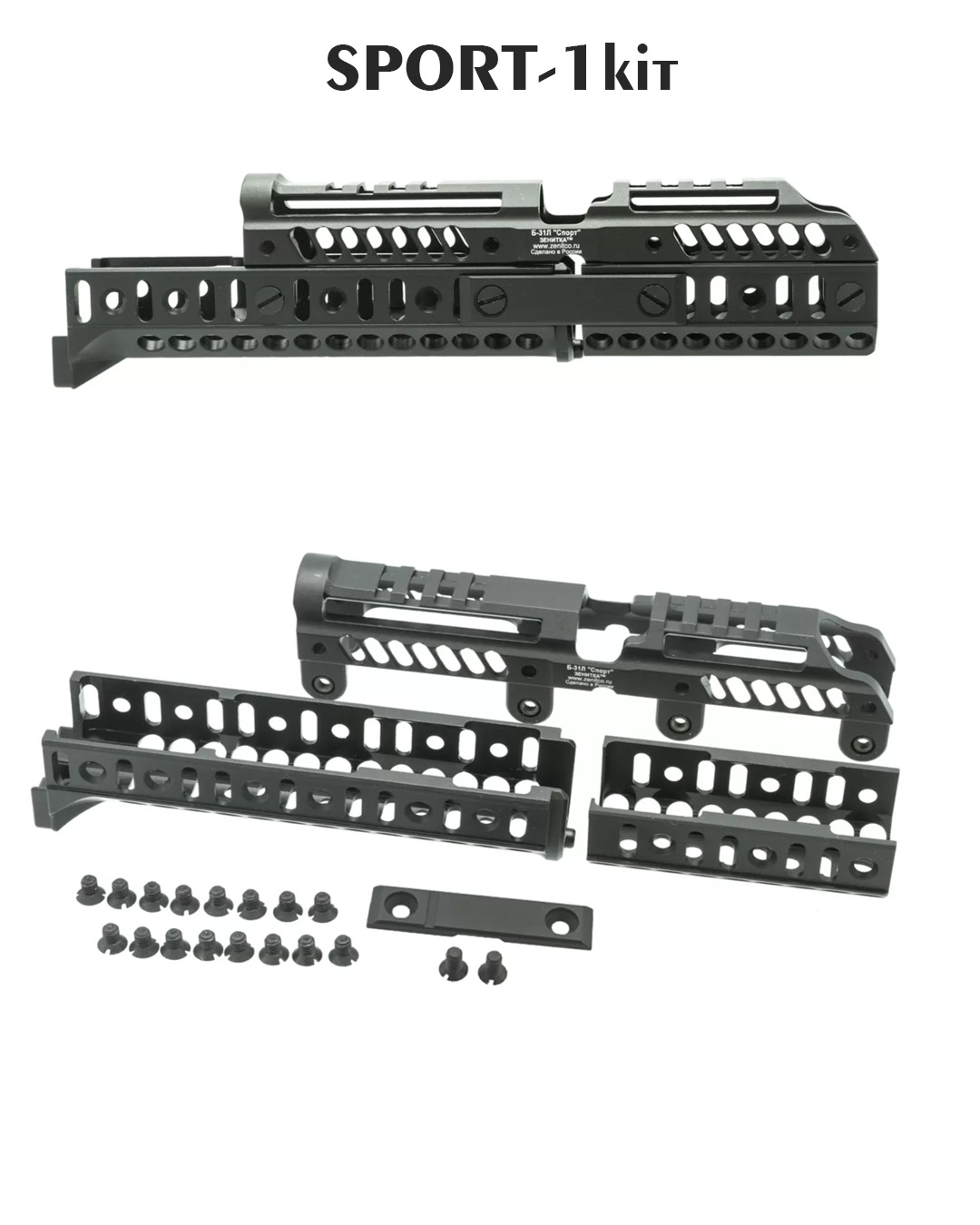
What it is — in plain words
Sport-1 is a kit of several aluminum modules (B-10L, B-31L, DL-1 and the Side bar “Sport-1”), 255 mm long and weighing about 250 ± 10 g. All parts are milled and finished in either black or desert color. In essence, it’s a metal replacement for the standard plastic handguard with built-in Basis rails for mounting additional accessories.
The technical hook: why aluminum instead of plastic?
Zenitco uses milled aluminum of the D16T class — the same family of alloys used in aviation and mechanical engineering. That provides:
- Higher structural stiffness (less play, a more stable platform for optics).
- Even distribution of load when mounting heavy accessories.
- Improved thermal conductivity (explained below).
What improved barrel cooling affects
One of Sport-1’s key operational advantages is improved heat exchange in the zone from the receiver to the upper handguard.
- Less overheating during sustained fire. Aluminum conducts heat away from the barrel/receiver area faster, so the region that contacts the handguard heats up more slowly — an advantage for long training sessions or rapid strings of fire.
- Ballistic stability. Localized heating of the barrel can cause thermal deformation (micro-bending, slight changes in bore tension) that shifts point of impact during rapid fire. Better heat dissipation reduces the amplitude of such shifts.
- Shooter comfort. Less heat on the fore part of the weapon means hands don’t “burn,” making it more comfortable to hold aiming positions.
- Protection of equipment. If electronics (cables, lights, sensors) are mounted on the handguard, the risk of them exceeding operating temperature is reduced.
- Possible side effect — increased corrosion risk in some conditions. Metal combined with heat, moisture or aggressive environments behaves differently than plastic; with proper surface treatment/coating (as Zenitco provides), this risk is minimized.
Important: “Cooling” is not a magic cure. Aluminum helps dissipate heat but does not keep the barrel cold under heavy continuous fire — it only slows the rate at which the adjacent sections heat up.
Advantages of weight reduction (less mass on the platform)
- Maneuverability and speed of presentation. Less mass on the front end makes quick “shoulder-up — acquire target” transitions and close-quarters movements easier.
- Reduced fatigue. During long marches or repeated position holds, weight noticeably affects the shoulder and posture — every gram counts.
- More predictable inertia. A light but rigid platform simplifies control of the weapon’s inertial behavior when switching aim points.
- Easy mounting of accessories without major weight redistribution. Zenitco designed Sport-1 as a balance between stiffness and minimum weight.
But there are drawbacks / trade-offs
- Less mass = less damping. A heavier plastic or composite handguard can damp vibrations. Light aluminum is stiffer and may transmit more vibration to optics/aiming devices — in rare cases requiring additional ballistic adjustment.
- Heat conduction. Aluminum conducts heat — so accessories mounted directly to the rails can warm faster if there is no thermal isolation.
- Cost and field reparability. Milled aluminum and precision joints are more expensive and harder to repair “in the field” than simple plastic parts.
- Corrosion risk if coating is damaged. If the anodizing/finish is mechanically damaged, aluminum can oxidize; regular maintenance and coating care are important.
Compatibility and accessories — what you can mount
Zenitco provides Basis rails on all sides, which means you can use: